
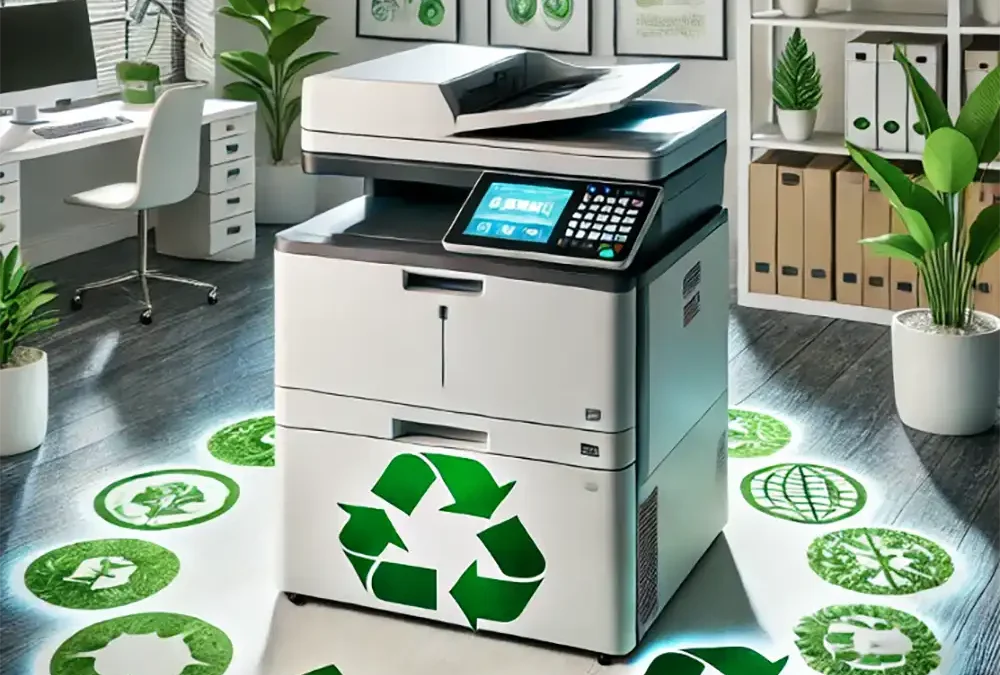
In today’s business environment, sustainability is no longer an afterthought—it’s a necessity. Companies are increasingly looking for ways to reduce their environmental footprint while maintaining operational efficiency. Leading copier brands such as Xerox, Epson, HP, Toshiba, and KIP have been at the forefront of eco-friendly innovations, integrating cutting-edge technology to minimize waste, reduce energy consumption, and enhance sustainability.
TL;DR
Leading copier and printer manufacturers are making office printing more sustainable through energy-efficient technology, recycled materials, cartridge recycling, lower-waste printing systems and improved power management. Xerox, Epson, HP, Toshiba and KIP each take different approaches to reducing environmental impact while maintaining business productivity. Bishop Business can help organizations evaluate printing solutions that support both workplace performance and sustainability goals.
Eco-Friendly Innovations from Leading Printer/Copier Brands
Xerox: Pioneering Energy-Efficient Printing
Xerox has long been committed to sustainability, leading the charge with energy-efficient printing technology. Their latest innovations include:
- Emulsion Aggregation (EA) Toner: This technology reduces toner waste while requiring lower fusing temperatures, resulting in less energy consumption.
- Recycled and Recyclable Materials: Xerox integrates more post-consumer recycled plastics in their copiers, with some models boasting up to 50% recycled content.
- Eco-Friendly Ink Options: Their solid ink technology significantly reduces packaging waste compared to traditional toner cartridges.
Epson: Driving Heat-Free Printing Technology
Epson’s Heat-Free Technology is a game-changer in sustainable printing. By eliminating the heat required for ink ejection, Epson printers:
- Consume up to 85% less energy than laser printers.
- Generate less waste due to fewer moving parts and maintenance needs.
- Extend the lifespan of devices, reducing e-waste accumulation.
HP: Closing the Loop on Sustainable Printing
HP is advancing sustainability through a circular economy approach, emphasizing:
- HP Planet Partners Program: A closed-loop recycling initiative that repurposes old cartridges and printers into new products.
- Carbon Neutral Printing Services: HP is offering carbon-neutral printing for businesses looking to offset their emissions.
- Forest-Positive Commitment: HP actively invests in reforestation programs to ensure responsible paper sourcing.
Toshiba: Cutting Emissions with Hybrid Copiers
Toshiba has introduced hybrid copiers that allow users to erase and reuse paper, a breakthrough in reducing paper waste. Their advancements include:
- Erasable Toner Technology: Enabling multiple uses of the same sheet of paper.
- Eco Mode Settings: Automatic adjustments to optimize energy efficiency based on usage patterns.
- Reduced CO2 Emissions: Through enhanced power management features.
KIP: Promoting Eco-Conscious Large-Format Printing
KIP, a leader in wide-format printing, has focused on:
- Low-Ozone Emission Toner: Minimizing harmful emissions during operation.
- Energy-Saving LED Printing Technology: Drastically cutting power consumption.
- Recyclable Media Options: Ensuring sustainability in large-scale printing projects.
How to Make Your Office Printing More Sustainable
Then use a short practical checklist:
- Right-size your equipment. A device that matches actual print volume can use energy and consumables more efficiently.
- Default to duplex printing. Two-sided printing can reduce unnecessary paper consumption.
- Consolidate underused devices. Too many small printers can increase energy use, supplies and service complexity.
- Choose efficient technology. Evaluate energy consumption, consumables, maintenance requirements and product lifecycle.
- Use managed print services. Monitoring print behavior can identify waste, unnecessary devices and opportunities to improve efficiency.
By adopting these eco-friendly solutions, businesses can take meaningful steps toward reducing their carbon footprint while maintaining high-quality printing capabilities. If you're interested in learning more about sustainable printing options, Bishop Business can help you find the right solution for your office.
Frequently Asked Questions About Sustainable Office Printing
What makes an office printer or copier more sustainable?
A more sustainable office printer typically uses less energy, produces less waste, incorporates recyclable or recycled materials and offers features that reduce paper and consumable usage.
Are inkjet printers more energy efficient than laser printers?
In many cases, business inkjet systems can use less energy because they do not require the same heat-intensive fusing process as laser printers. Epson, for example, promotes its Heat-Free Technology as a way to reduce energy consumption.
How can businesses reduce printing waste?
Businesses can reduce waste by using duplex printing, right-sizing their device fleet, choosing equipment with efficient consumable systems, participating in cartridge recycling programs and monitoring unnecessary printing.
Do printer manufacturers offer recycling programs?
Yes. Several major manufacturers offer recycling or circular-economy initiatives. The article specifically highlights HP's Planet Partners program and recycling-focused practices from other manufacturers.
Can sustainable printing also reduce operating costs?
Yes. Lower energy consumption, reduced paper use, fewer consumables and more efficient equipment can lower operating costs while also reducing environmental impact.