
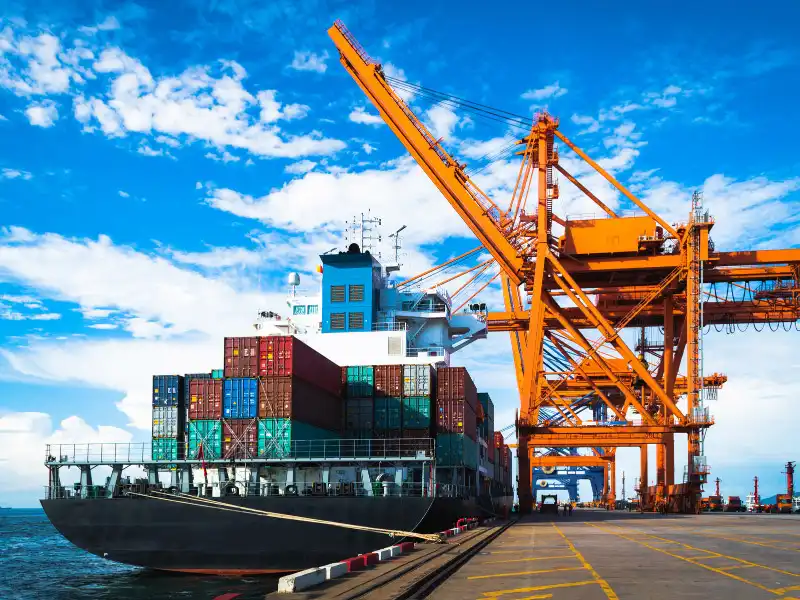
Supply chain shortages have presented numerous challenges for office machine dealers and their customers. Manufacturing delays due to shortages in essential parts and components have led to months-long backlogs. However, that doesn’t mean you won’t be able to find the copiers and printers you need to keep your business running.
TL;DR
During the 2022 copier and printer supply-chain shortage, Bishop Business helped customers avoid downtime by sourcing equipment across multiple manufacturers, offering pre-owned machines, extending existing leases when appropriate and setting realistic expectations about delivery times. The article shows the value of working with an independent dealer that can offer alternatives instead of relying on a single product source.
Editor’s Note: This article was originally published in June 2022 during widespread global supply-chain disruptions affecting copiers, printers and replacement parts. The specific shortages and lead times discussed below reflect conditions at that time. The article remains published as an example of how Bishop Business helped customers respond with flexible equipment sourcing and proactive planning.
In this 2022 interview, then-President and CEO Dave Bishop explained how Bishop Business helped customers navigate unusually difficult supply conditions. Bishop Business is in an excellent position to meet the needs of our customers, despite supply chain woes. As a large, independent dealer, we have access to products and parts around the country. We’re able to provide more options for our customers than any manufacturer’s branch.
Here’s a closer look at how supply chain issues are affecting the copier/printer market and how Bishop Business can help you find the products and parts you need to keep your business running.
How has this shortage affected Bishop Business?
DAVE: Supply chain issues are certainly real, and Bishop Business has experienced it firsthand. We had hoped supply chain problems would have gotten better at this point, but there seems to be no end in sight.
As for how we’ve been directly affected, copiers, printers, and parts have been trickling in, which has led to longer lead times for some customers. Most of the time, these delays are due to shortages in components. For example, a copier that’s otherwise ready to ship may be waiting on a microchip. Or, a copier may be ready to ship, but it’s missing its feeder or sorting machine. These are the types of supply chain issues we’ve seen recently.
That being said, Bishop Business is in a much better position than manufacturers’ branch offices to handle these issues. We work with three manufacturers, which means we can often source a solution for a customer from another brand. We also have access to pre-owned machines, which are lifesavers for many of our customers.
How is Bishop Business working around supply issues?
DAVE: First of all, we’re being upfront with our customers about the reality of purchasing new machines in the current environment. We’re transparent about delivery times and always offer alternatives. Pre-owned machines can be good options for customers. Many machines have low mileage due to slowdowns during the pandemic, which has extended the life of many copiers and printers. So a company may choose to go with a pre-owned machine rather than buying new. Other times, we may recommend a company extend the lease on their current machines if they are in good working order. Because of these creative solutions, most of our customers are not experiencing downtime due to supply chain delays.
Another advantage we’ve had over some other dealers is that Toshiba, one of our manufacturers, has a plant in South Dakota. So, we’ve been able to continue to provide consistent toner deliveries to most of our customers when other dealers are waiting on toner from overseas.
What are your predictions about the future of the supply chain for copiers and printers?
DAVE: Last fall, experts predicted supply chain issues wouldn’t be resolved until late 2022, and it appears they were right! We’re definitely still dealing with supply chain shortages. Add to that the global fuel price increases and inflation, and we expect supply chain issues will continue to be a concern.
However, I’m excited to see that COVID-19 is dissipating and people are getting back to work. We’ve got the supplies and the parts to keep customers’ machines running and offices functioning.
What do you recommend customers do to avoid these issues?
DAVE: Be sure to look at your needs well in advance. If your lease on your copier or printer is expiring within nine months, you want to reach out to us now. It will take you a few months to decide on your next machine and another three to six months for that machine to arrive.
I also highly recommend that companies do some long-range planning. Don’t assume the supply chain shortage will get better quickly. Take a look at your long-term equipment needs and get your orders in sooner than when you predict you’ll need it.
Of course, I also recommend that you make sure your dealer will be able to fill your orders. Bishop Business is a large, independent dealer with access to several manufacturers’ products. This gives us a lot of flexibility in finding solutions for our customers. If you’re on the hunt for new office machines, I recommend you work with an independent dealer like Bishop. You can get in touch with us at Bishop Business or give us a call at 402-537-8000.
Why Dealer Flexibility Matters
I would add this section after the historical interview:
More equipment options
An independent dealer can evaluate multiple manufacturers rather than forcing every customer into one product line.
Alternative equipment strategies
A well-maintained pre-owned machine or short-term lease extension may sometimes make more business sense than waiting for a specific new model.
Proactive lifecycle planning
Waiting until a copier fails or a lease expires can unnecessarily limit your options.
Transparent communication
Customers should know realistically what is available, how long delivery may take and what alternatives exist.
Prepared for the Unexpected
The supply challenges of 2022 were unusual, but the lesson still applies: workplace technology decisions are easier when businesses have options.
Bishop Business works with customers to evaluate equipment needs, service requirements, lifecycle timing and available alternatives so a single product shortage—or an aging machine—does not have to become a workplace disruption.
Your Workplace Working Better. Since 1954.
Frequently Asked Questions About Copier and Printer Supply Chain Issues
What caused copier and printer shortages in 2022?
The article explains that shortages of components such as microchips, feeders and finishing equipment created long production and delivery delays for copiers and printers.
How did Bishop Business help customers during equipment shortages?
Bishop Business used several strategies, including sourcing products from multiple manufacturers, offering pre-owned equipment, extending existing leases when machines were still performing well and being transparent about expected delivery times.
Why can an independent copier dealer offer more flexibility?
An independent dealer can often work with multiple manufacturers instead of being limited to one brand. In the article, Bishop Business says this allowed it to recommend alternative equipment when a particular model or manufacturer was experiencing delays.
Can pre-owned copiers be a good alternative when new equipment is unavailable?
Yes. A well-maintained pre-owned machine can provide a practical temporary or long-term solution when new equipment has extended lead times, provided the device fits the organization’s workload and service requirements. Bishop used this approach during the 2022 shortage.
Should businesses plan copier replacements before a lease expires?
Yes. Businesses should review equipment needs before a lease expires so there is time to evaluate options, budget appropriately and avoid rushed replacement decisions. The 2022 article recommended beginning the process well in advance because equipment lead times were unusually long.
Is the copier supply-chain shortage described in this article still current?
No. The article documents conditions in 2022. The exact shortages and lead times described should be treated as historical context rather than current purchasing guidance.