
Technology evolves at a rapid pace. Hardware and software goes obsolete seemingly overnight as the newest devices and applications hit the market. But rather than becoming obsolete in the face of innovations such as email, SMS, and AI, print technology is just as popular as ever. How?
TL;DR
Print technology has evolved rather than disappeared. From early written records to modern multifunction devices, businesses still rely on printed information while increasingly connecting print with digital workflows. Today’s copiers can improve efficiency, reduce waste and support secure document handling, while enterprise content management can automate digital processes and make information easier to manage. Bishop Business helps organizations combine print and digital technology based on how their workplaces actually operate.
A 5,000-Year-Old Technology
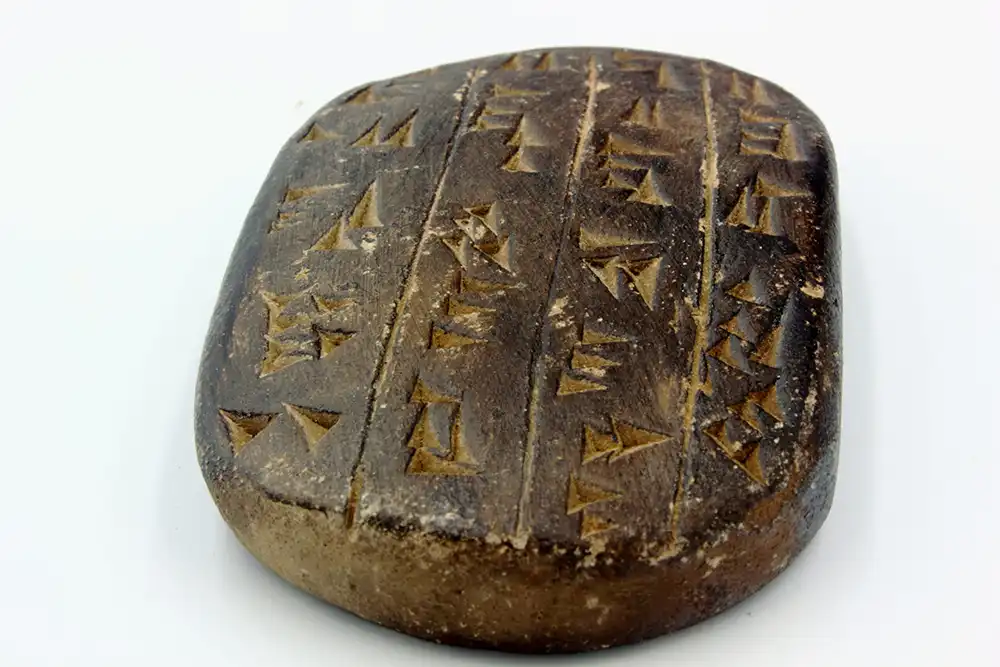
The earliest-known example of writing was found on clay tablets around the Persian Gulf more than 5,400 years ago. Since then, the print medium has certainly changed, but the desire for humans to create written records has never waned. This is why print hasn’t gone obsolete, but instead has evolved in tandem with other technologies that make recording our thoughts, ideas, and data ever easier.
The Staying Power of Print Technology
Many experts predicted the pandemic would cause a permanent dip in the use of print technology for business. We did experience a dip while in the throes of the emergency; however, demand for copiers and other business machines has bounced back to pre-pandemic levels.
One factor that contributed to this rebound is the strong economy. Businesses that weathered the pandemic are investing in equipment now that workers are back in the office. Companies still require print throughout their operations, from paper forms and records to signage to pressure-sensitive labels for product packaging. Organizations understand that print will always be needed, but they continue to look for new ways to leverage technology to drive efficiency and reduce costs.
Print and Digital Innovations
We’ve come a long way from the clay tablets of five millennia ago. Today’s copiers and other business machines are state-of-the-art, efficient business tools. Equipment that helps businesses print more efficiently, save on paper, toner, and machine wear and tear, while providing security to transmit data safely across your network is needed in today’s modern workplaces.
Additionally, most organizations have made a shift to managing communications digitally. Going beyond purely saving documents in the cloud, efficient companies leverage digital innovations like enterprise content management (ECM) to automate their business processes and streamline their operations. New employee onboarding paperwork or contractual agreements that go through a multi-step approval process can be managed by automated workflows that save your team time and money while storing data securely.
Then-President and Owner Dave Bishop explained “here at Bishop Business, we take the time to work with each one of our customers to understand their document needs and create a plan that leverages available technology in ECM paperless storage as well as the latest print technology. Personalized customer service is what we do best, each customer has their own unique needs.”
Document management, whether that be print or digital will evolve, but it will never be obsolete. To work with your local, independent provider of business machines and ECM sales and service, get in touch with Bishop Business at bbec.com or give us a call at 402-537-8000 today.
Print or Digital? The Better Question Is What Works Best
The goal is not to eliminate print simply because digital technology exists. The goal is to create the most efficient way for people to work.
Some processes still benefit from print. Others can be digitized and automated. Many businesses need both.
Bishop Business helps organizations understand that mix and choose equipment, services and digital workflows based on their actual needs.
Your Workplace Working Better. Since 1954.
Frequently Asked Questions About the Evolution of Print Technology
Is print technology becoming obsolete?
No. Print remains part of many business processes even as organizations adopt digital communication and automation. Modern print technology increasingly works alongside digital systems rather than competing with them.
How has office print technology changed?
Office printing has evolved from basic standalone machines into multifunction devices that combine printing, copying, scanning, networking and security features. Modern devices can also connect printed documents to digital workflows.
Why do businesses still need printers and copiers?
Businesses still use print for forms, records, presentations, marketing materials, signage, labels and other physical communications. The right equipment can improve productivity while controlling paper, toner and maintenance costs.
How do print and digital workflows work together?
A multifunction device can scan physical documents into digital systems, where enterprise content management software can organize, route, approve and store the information. This helps bridge paper-based and digital business processes.
What is the future of print technology?
The future of print is increasingly connected, secure and integrated with digital workflows. Businesses are using smarter equipment, cloud connectivity, workflow automation and AI-assisted tools to make document processes more efficient.